

Salary allowances in Mozambique: what the law provides
Meal allowance, transport allowance, and per diems explained: how they appear on the payslip, paid leave rights, and the truth about the 13th month bonus.
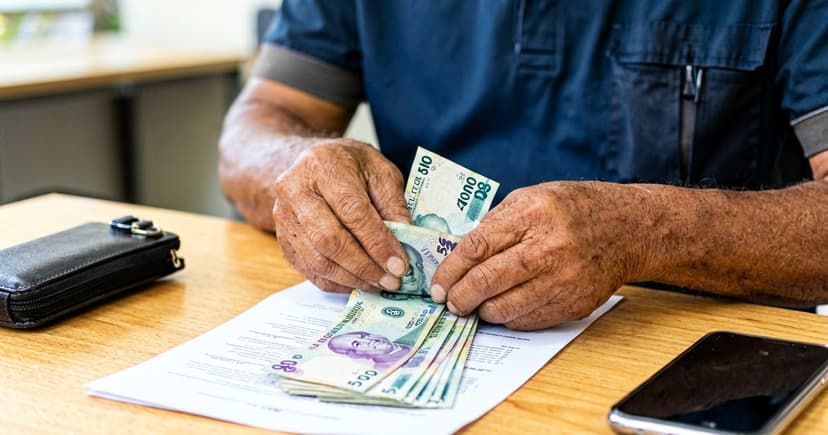
In Mozambique, salaries may include a meal allowance, transport allowance, and per diems, in addition to legally mandated paid leave. However, the 13th month bonus is not mandatory — it depends on the contract, collective agreement, or company policy.
Many Mozambican workers face doubts when interpreting their payslip and distinguishing base salary from additional benefits paid by the company at the end of the month.
According to current labor legislation in Mozambique (Law No. 13/2023), the meal allowance and transport allowance represent additional benefits to the base salary depending on the contract or collective agreement, while paid leave constitutes an unrenounceable legal right and the 13th month payment is not mandatory under national law.
If you want to understand in detail how Mozambican legislation regulates your financial rights, legal deductions, and compensation calculations, you can explore more practical and updated articles in our Inademy Guide.
The short answer
- Additional benefits in Article 118: The meal allowance and transport allowance are considered additional benefits to the base salary and are not automatically included in the calculation of severance pay upon contract termination.
- 13th month is not mandatory: The Mozambique Labor Law does not require employers to pay a 13th or 14th month salary; this benefit depends on a contractual clause, collective bargaining agreement, or internal company policy.
- Maximum deduction limit: In no case may the total value of deductions on the payslip exceed one-third (1/3) of the worker's monthly remuneration.
- Right to paid leave: Workers are entitled to 12 working days of paid leave in their first year of employment and 30 working days in subsequent years.
- Overtime work: Overtime is paid with a 50% increase over the normal hourly rate if performed before midnight, and with a 100% increase after midnight until the start of the next work shift.
What the law considers remuneration
To avoid confusion at the time of payroll settlement, it is essential to understand the legal definition of remuneration. Article 117 of Law No. 13/2023 expressly defines the concept:
"Remuneration is considered to be whatever, under the terms of an individual or collective contract or custom, the worker is entitled to as compensation for their work. Remuneration includes the base salary and all regular and periodic benefits made directly or indirectly, in cash or in kind."
Although remuneration includes the base salary and allowances paid regularly, there is a crucial distinction regarding legal effects. Paragraph 3 of Article 118 stipulates that the calculation base for compensation upon termination of the employment contract includes only the base salary and seniority bonus, unless the parties expressly agree to include other additional benefits.
This means that if a worker receives a moderate base salary supplemented by high per diems and allowances, the calculation of any severance pay will, by legal rule, be based on the base component and seniority. To better understand how these values affect net income at the end of the month, see the detailed explanation on net vs gross salary in Mozambique.

Additional benefits: the list under Art. 118
Article 118 of Law No. 13/2023 stipulates that additional benefits may be temporary or permanent, resulting from a contract, a collective bargaining agreement, or exceptional circumstances. The following categories constitute additional benefits to the base salary:
- Per diems and transport: Per diems, transport expenses, relocation expenses due to employee transfer, and other equivalent allowances.
- Food and cash handling: Cash shortage allowances and meal allowances.
- Extraordinary bonuses: Bonuses of an extraordinary nature granted by the company.
- Night work: Additional payments derived from working during night hours.
- Abnormal conditions: Payments due for working under arduous, hazardous, or abnormal conditions.
- Productivity and efficiency: Bonuses linked to meeting efficiency indicators and performance targets.
- Seniority: Seniority bonus established in collective bargaining agreements.
- Profit sharing: Shareholdings or participation in employer profits.
- Other conditions: Benefits due to exceptional work circumstances and conditions.
Meal allowance: how it works
The meal allowance is framed under point b) of paragraph 2 of Article 118 of Law No. 13/2023. It is characterized as an additional benefit to the base salary aimed at supporting the worker's daily meal expenses during the workday.
In Mozambican labor market practice, the granting and amount of this benefit follow these rules:
- No mandatory national minimum amount: Mozambique's general labor legislation does not set a mandatory minimum amount in Meticais (MT) for the meal allowance. Values are determined in the individual employment contract, internal company regulations, or through a Collective Bargaining Agreement (CBA).
- Payment per worked day: In most organizations, the allowance is calculated and paid based on actual worked days performed during the month. On days of absence, unexcused absences, or unpaid leave, the allowance follows strictly what is stipulated in the contract or applicable agreement.
- Legal nature: As an additional benefit, it is not automatically included in the calculation base for contract termination compensation, unless there is a written agreement to the contrary between the parties.
Transport allowance and per diems
Transport allowances and per diems are provided for in point a) of paragraph 2 of Article 118 of Law No. 13/2023. These benefits aim to reimburse workers for expenses incurred during work-related travel or commuting between home and the workplace.
The provision of transport or an equivalent financial value varies substantially depending on the industry sector and the nature of the job duties.
For example, professionals who travel frequently for work or work rotating shifts — such as drivers, field technicians, or healthcare workers — often rely on specific per diems regulated by internal policies or sector agreements. You can compare the salary structure of these roles by reading about driver salary in Mozambique.
Paid leave: 12 days in the first year, 30 thereafter
The right to annual paid leave is an unrenounceable right of all workers in Mozambique, as enshrined in Articles 107 to 111 of Law No. 13/2023. The law prohibits denying the right to leave, guaranteeing the necessary rest for the employee's physical and psychological recovery.
The duration and management of the leave period adhere to the following legal parameters:
- Duration in the 1st year of work: Workers are entitled to 12 working days of paid leave during their first year of service (Article 108, paragraph 1).
- Duration in subsequent years: From the second year of actual work at the same company, the entitlement is set at 30 working days of leave for each calendar year.
- Fixed-term contracts under 1 year: In contracts lasting over 3 months and under 1 year, workers are entitled to 1 working day of leave for each month of actual service (Article 108, paragraph 3).
- Substituting leave for compensation: Taking leave may be substituted for additional pay by mutual agreement, but the law requires workers to actually take a minimum of 6 working days of rest (Article 107, paragraph 3).
- Accumulation and advance leave: A maximum accumulation of 15 days of leave per 12 months of work is permitted (Article 110, paragraph 2) as well as advance leave up to a maximum of 30 days. However, total accumulation in the same calendar year cannot exceed 60 working days, under penalty of forfeiture of the right (Article 110, paragraph 3).
- Holidays and illness: Public holidays and documented sick days are not counted towards the leave period (Article 111).

13th month: not mandatory in Mozambique
Contrary to popular belief among many workers, labor legislation in Mozambique does not obligate private companies or public institutions to pay a 13th or 14th month salary. According to technical analysis by WageIndicator Mozambique, based on Articles 117 to 124 of Law No. 13/2023:
"Mozambican legislation does not provide for mandatory payment of a 13th or 14th month."
When a worker receives a 13th month salary, Christmas bonus, or year-end bonus in Mozambique, such payment results from one of the following situations:
- An express clause in their individual employment contract.
- A provision set out in the Collective Bargaining Agreement of the company or sector.
- A unilateral and discretionary decision by the employer based on annual results.
To check how salary scales for different public and private careers are structured, you can read our article on teacher salary in Mozambique.
The payslip must itemize everything
The payslip (or remuneration settlement) is a mandatory document provided by the employer. Article 123 of Law No. 13/2023 clearly stipulates that employers are required to provide proof of payment to workers at the time of payment.
The payslip must mandatorily contain the following itemized elements:
- Full name of the company and worker, as well as their job category.
- The exact period to which the remuneration corresponds (month, fortnight, or week).
- A clear breakdown of base salary and all additional benefits (meal allowance, transport, bonuses).
- Details of all deductions made (INSS, IRPS, withholdings).
- The net amount actually payable to the worker.
The same article provides that when payment is made partially in kind or non-monetary benefits, the non-monetary component cannot exceed 25% of total remuneration, according to WageIndicator.
What companies can deduct
Protection of salary against unauthorized deductions is one of the fundamental guarantees for workers in Mozambique. Article 124 of Law No. 13/2023 establishes that salary cannot be subjected to any deduction or withholding that is not expressly authorized in writing by the worker.
Only the following legal situations are exempt from this requirement of prior written consent:
- Deductions in favor of the State or Social Security (INSS) mandated by law.
- Deductions ordered by a final court judgment or arbitral award.
- Application of fines for disciplinary offenses, under terms provided by law and regulations.
It is vital to highlight the strict legal limit stipulated in paragraph 4 of Article 124:
"In no case may the total value of deductions exceed one-third of the worker's monthly remuneration."
Note that according to paragraph 5 of the same article, salary advances granted by the company upon prior request by the worker are not considered deductions for the purposes of the one-third legal limit.
Overtime: +50% and +100%
When company requirements demand work beyond regular working hours, overtime compensation follows strict rules stipulated in Article 125, paragraph 1 of Law No. 13/2023:
- Work performed up to midnight: Paid with a 50% markup on the normal hourly rate.
- Work performed between midnight and the start of the next normal workday shift: Paid with a 100% markup on the normal hourly rate.
Compliance with these percentages is mandatory and must be properly reflected on the payroll statement for the corresponding month.
How Inademy helps you
Understanding your compensation rights is the first step toward building a solid and fair professional career in Mozambique. The Inademy platform supports your journey in several practical ways:
- Free Professional Profile: You can create your online profile at no cost to present your CV to hiring companies.
- Updated Job Vacancies: Explore job opportunities across various sectors and regions by checking open vacancies on Inademy.
- Transparent Comparison: Follow salary ranges published in job postings to understand averages in the Mozambican market.
- Personalized Alerts: Receive direct notifications via email or WhatsApp as soon as vacancies aligned with your profile become available.
- Technical Preparation: Learn about formal application requirements and discover essential personal details to include in your CV.
Read also
Where these numbers come from
The legal information and financial data presented were compiled and verified based on primary and official sources from Mozambican labor and legal frameworks:
- Law No. 13/2023 (Mozambique Labor Law): Official text approved by the Assembly of the Republic and published by the Ministry of Labor and Social Security (mtgas.gov.mz), focusing on Articles 107 to 111 (leave), 117 and 118 (remuneration and additional benefits), 123 (payslip), 124 (deductions), and 125 (overtime).
- WageIndicator Mozambique: Comparative analysis of regulatory frameworks for benefits, 13th month, and remuneration in the Mozambican private sector.
- Agência de Informação de Moçambique (AIM) / INSS: Sectoral reference figures for current minimum wages in the country, such as Construction (8,652.00 MT), Hospitality (10,600.00 MT), Manufacturing (10,622.50 MT), and Financial Sector/Banking (20,361.43 MT). To view the complete sectoral list, read our article on minimum salary in Mozambique by sector.
Frequently asked questions
Is the meal allowance mandatory in Mozambique?
No. The Mozambique Labor Law (Law No. 13/2023) frames the meal allowance as an additional benefit to the base salary under Article 118. Its granting only becomes mandatory if explicitly provided for in the individual employment contract, internal company regulations, or a Collective Bargaining Agreement.
How much is the meal allowance in Mozambique?
Mozambican legislation does not set a legal minimum amount in Meticais for the meal allowance. The amount varies freely based on negotiations between worker and employer, internal company policies, or sector collective agreements.
Is the transport allowance mandatory by law?
The transport allowance is considered an additional benefit or per diem under point a) of paragraph 2 of Article 118 of Law No. 13/2023. Unless there is a contractual provision, sector agreement, or binding company regulation, general law does not impose a fixed transport allowance for all workers.
Do I get paid leave in my first year of work?
Yes. As established in Article 108, paragraph 1 of Law No. 13/2023, workers acquire the right to 12 working days of paid leave during their first year of actual service. In subsequent years, the entitlement increases to 30 working days per calendar year.
Is the 13th month mandatory in Mozambique?
No. Mozambican labor legislation does not require employers to pay a 13th month, 14th month, or other fixed annual bonuses. Payment of a 13th month depends entirely on agreement in the employment contract, collective bargaining agreement, or company decision.
Can I receive holiday allowance in cash instead of taking leave?
The law allows taking leave to be substituted with extra compensation by agreement between the worker and the company. However, paragraph 3 of Article 107 of Law No. 13/2023 expressly requires the worker to actually take a minimum of 6 working days of real rest.
In summary, what to do today
To ensure you are receiving your earnings fairly and in full compliance with Mozambican labor legislation, follow these practical steps:
- Analyze your payslip: Confirm that your payslip clearly itemizes base salary, meal or transport allowances, and legal deductions applied.
- Check the deduction limit: Ensure that the sum of all deductions on your monthly salary does not exceed the legal limit of one-third (1/3) of your remuneration.
- Review your employment contract: Check your contract clauses or collective agreement to confirm whether you are entitled to a meal allowance, transport allowance, or 13th month bonus.
- Manage your leave plan: Plan taking your 12 working days in your first year (or 30 days in subsequent years), avoiding accumulating more than 60 days in the same calendar year to avoid forfeiting the right.
- Update your career: Keep your professional profile updated on Inademy and follow new opportunities with salary transparency in the Mozambican market.
Official source: Law No. 13/2023 (Labour Law) is available as a PDF on the website of Mozambique's Supreme Court (Tribunal Supremo): official text (PDF).