

Disability and Survivor Pensions: Who Is Eligible
Who is entitled to INSS disability and survivor pensions in Mozambique: the 30-month contribution rule, required documents, and how to apply.
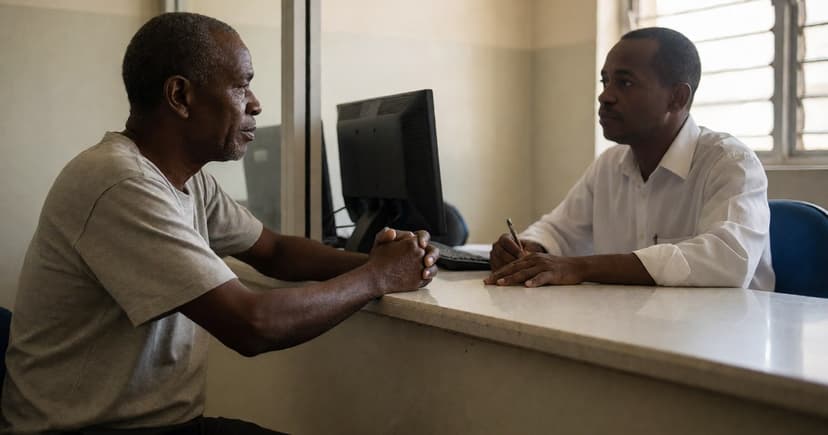
The INSS invalidity pension is there for when illness or a non-occupational accident deprives you of your ability to work. The survivor's pension comes into play when a contributor dies and their family needs to maintain their income. Both benefits stem from the contributions you already make every month — 7% of your salary — and follow rules published on the official INSS website.
In short: if you become completely unable to work and have at least 30 months of contributions over the past 5 years, you are entitled to the invalidity pension. If you die as a contributor or pensioner, your spouse and children receive the survivor's pension, either temporary or lifelong, depending on each person's age.
This guide brings together the requirements, documents, and application process, based on the institute's official pages. At Inademy, we publish job vacancies and practical content for people working in Mozambique; information like this is part of our mission: less bureaucratic fear, more confident decisions in your career.
The essentials in 30 seconds
- Disability: total incapacity certified by the Medical Board, with at least 30 months of contributions in the last 5 years.
- Survivors: surviving spouse or domestic partner and children of a deceased person who had at least 60 months of contributions, or of a pensioner.
- Temporary or lifelong: the temporary survivor's pension lasts 5 years; it becomes lifelong when the widow turns 45 or the widower turns 50, or when there is permanent incapacity.
- Deduction: 7% of gross salary — 4% paid by the company, 3% deducted from the worker. In the TCP, the 7% is borne entirely by the individual.
- Key documents: identification, beneficiary card, NIB and, in case of disability, the medical certificate and report from the Medical Board.
- Regime transition: when you reach retirement age, the disability pension automatically converts to an old-age pension.
What is the INSS disability pension
The INSS considers a worker disabled when an illness or non-occupational accident reduces their physical or mental capacities. This reduction must be certified by the Health Board to the point of causing total incapacity for work. This is how it is stated on the official benefit page, and it is this certification that starts the process.
Note a detail that confuses many people: the assessment is not done by your family doctor, but by a health board, which issues its own certificate. Without this certificate, the application cannot proceed. Therefore, the first practical step is to schedule the assessment and secure the medical report, rather than rushing to the agency with incomplete paperwork.
Workplace accidents follow their own path, separate from general disability. If the issue originated at the workplace, speak first with your human resources manager and consult our list of workers' rights in Mozambique.
The requirements, in numbers
The golden rule is about the months: you need at least 30 months of contributions during the 5 years preceding the onset of incapacity. The INSS looks at that five-year window and counts the contribution entries registered under your beneficiary number.
A simple example: if incapacity began in 2026, contributions registered since 2021 are counted. You do not need 30 consecutive months; you need 30 months with registered contributions within that window. Falling short of this number is the most common reason for rejection due to lack of qualifying period.
If you are not even registered in the system, none of this applies. Registration is the first step, and we have a dedicated guide on how to register with the INSS, covering the steps for both workers and employers.
What total incapacity means
Total means you are unable to engage in gainful employment—it is not the same as having a serious illness and continuing to work. The health board assesses this threshold based on the medical report. Keep copies of everything: the certificate and the report will accompany the application from start to finish.
How to apply for an invalidity pension, step by step
- Check your contributor status. Verify your beneficiary number and contribution history before proceeding; any questions can be resolved at INSS branches or digital services.
- Undergo a medical assessment. Obtain the Health Board certificate and the medical report describing the disability.
- Gather the documents. Identification, beneficiary card, NIB, and medical certificate, according to the official benefit list.
- Submit the application at an INSS branch. Go to your local branch or delegation; in Maputo, headquarters is located at Avenida 24 de Julho, n.º 3549, phone +258 21 227 300 and email inss@inss.gov.mz.
- Track your application. Keep your NIB active and contact details updated; pension payments will be deposited into this account if approved.
Official INSS pages do not publish a single processing timeframe. Request proof of submission when delivering your application, and follow up with the branch where you submitted it. That is the quickest way to get an update.
Required documents
- ID document: national ID card, birth certificate or registration record, personal booklet, passport, or DIRE.
- INSS beneficiary card.
- Applicant's Bank Account Number (NIB).
- National Health Board certificate and medical report.
Survivor's pension: who receives it when the contributor dies
The survivor's pension protects the family of a deceased beneficiary or pensioner — whether receiving disability, old-age, or reduced pension. The main beneficiaries are the surviving spouse or common-law partner of the deceased, and the children. The rules change depending on the age and situation of each household member.
There is one condition that often goes unnoticed and determines many applications: when the deceased was a contributor (and not a pensioner), they must have at least 60 months of registered contributions at the date of death. Keep this number in mind. And pay attention to the deadline: submitting your application early determines when the pension payments begin.
There are two types of benefit, temporary and lifelong, and the boundary between them is age: 45 years for women and 50 years for men. Keep these two numbers in mind, because they explain almost all the questions families take to the office.
When the pension is temporary
The surviving spouse or common-law partner receives a temporary pension when, on the date of death, they are under 45 years old in the case of a woman, or under 50 in the case of a man. The duration is 5 years.
If, during this period, they reach the age that grants access to the lifelong pension, the transition happens automatically, without a new application. The application deadline also matters: if requested within six months following the death, the pension retroactively starts on the first day of the month after death; submitted later, it only begins the month after the application.
When the pension is lifelong
- Surviving spouse or common-law partner aged 45 or older in the case of a woman, or 50 or older in the case of a man.
- Younger spouse, but with total and permanent incapacity for work, duly proven.
- Child with a physical or mental disability that prevents them from engaging in any paid activity — with no age limit.
What about studying children?
Children are entitled until age 18. Protection is extended when they are enrolled and passing their courses: up to age 21 in secondary education and up to age 25 in higher education. To prove this, INSS requires enrollment and attendance certificates. Since age limits can be verified case by case, bring updated certificates on the day you submit your application.
Required documents for survivor benefits
- For the deceased: ID document or DIRE, full-form birth certificate or birth registration.
- Death certificate.
- Beneficiary or pensioner card.
- For the spouse: ID document, cohabitation certificate proving they were not separated, and NIB.
- For descendants: birth certificates and enrollment and attendance certificates, where applicable.
- In situations provided by law, INSS also requires documents for dependent parents — confirm your specific case at the office.
How much is deducted for these protections
For formal employment, the contribution rate is 7% of the gross salary: 4% paid by the employer and 3% deducted from the worker. This money funds social security benefits, from sickness allowances to pensions. If you confuse gross with net, our salary deductions guide explains the difference line by line.
Self-employed individuals also contribute: the rate is 7%, but paid in full by the worker. The advantage is having the same protection; the commitment is managing payments month by month. Without up-to-date contributions, both disability and survivor coverage lose their foundation — eligibility isn't created by decree, it is built by paying.
The INSS also provides a death grant for families, a benefit distinct from the survivor's pension. Do not confuse the two: they are different types of support with their own rules. The requirements for each are in the complete guide to the INSS in Mozambique, where we go through all the system's benefits.
When disability pension becomes old-age pension
A disability pension is not permanent, in a good way: when you reach old-age retirement age, the INSS automatically switches you to the old-age pension. Currently, this age is 55 for women and 60 for men, with 240 months of contributions. Anyone with 420 months of contributions is entitled to the benefit regardless of age.
For those reaching retirement age with fewer than 240 months, there is a reduced pension, which requires at least 120 months and pays 50% of the old-age pension. Meanwhile, the public sector retirement age has increased to 65 — we have an article dedicated to this change to 65, covering its progress through Parliament and exceptions up to age 70.
A practical note on payment amounts: pensions are not equal for everyone. The amount depends on registered earnings and months of contributions, and there is no simple public table on the website. Anyone who wants an estimated calculation should request it directly from the INSS, with their beneficiary number at hand.
Five mistakes that delay the application
- Missing qualifying period: submitting the application with fewer than 30 months of contributions within the 5-year window, without realizing the issue beforehand.
- Insufficient medical report: a simple doctor's note does not replace the Health Board certificate required by the INSS.
- Wrong or inactive NIB: the pension has nowhere to be paid; confirm the bank account before submitting the file.
- Incomplete family documents: for survivor benefits, missing school enrollment certificates or proof of cohabitation will send the application back.
- Waiting too long: months without an application are months without benefits; gather the paperwork and submit as soon as the disability is certified.
Read also
- Minimum Wage in Mozambique: official table and history
- Teacher Salary in Mozambique 2026: how much they earn
- Driver Salary in Mozambique 2026: how much they earn
Frequently asked questions
How long does it take for a disability pension to be approved?
Official INSS pages do not publish a single response timeframe. Processing times vary by office, completeness of documentation, and medical evaluation. Always request proof of application and track the process at the office where you submitted it.
Do I receive the disability pension forever?
Not under the same category: when you reach old-age retirement age, the benefit automatically converts to an old-age pension. The Medical Board certificate remains the central document in the process, as it establishes total incapacity.
Is an ex-spouse entitled to a survivor's pension?
The official list specifies the surviving spouse or someone who lived in a de facto union with the deceased, verified by a certificate of cohabitation. Divorce ends this entitlement. Situations involving maintenance agreements follow different rules and should be clarified directly with the INSS.
Are self-employed workers also eligible for these pensions?
Yes. Self-employed workers contribute 7% paid entirely by themselves, and the system provides benefits for the worker and their family, according to official benefit pages. The critical factor is regularity: missed payments create gaps in the qualifying period.
Can I receive a survivor's pension and work?
It depends on your status within the benefit. The lifetime path for total incapacity assumes you cannot engage in paid work. Since there are various situations—spouses of qualifying age, children studying—the accurate answer for your case is determined at the office, with your file at hand.
How much pension will I receive?
The amount depends on registered earnings and contribution months, and there is no simple public table on the website. The INSS calculates on a case-by-case basis; request a calculation estimate at the office using your beneficiary number. Be wary of anyone promising a specific figure without reviewing your contribution history.
How much is the survivor's pension worth?
The regulation rule is simple: the benefit is equal to the pension amount the deceased received at the time of death. It is split into two halves: one for the surviving spouse or partner, and the other divided equally among the orphans. Without a surviving spouse, the full amount goes to the children.
What if the 30 months of contributions are not completed?
Without the qualifying period of 30 months in the last 5 years, the disability application does not meet the basic requirements. Still, it is worth visiting the office: there are different benefits and support options, and your record may have specific details that only the INSS can confirm.
When should the family submit the survivor's pension application?
As soon as possible. If requested within six months following the death, the pension is retroactive to the first day of the month after the death; if submitted after that period, it begins the month following the application. Once approved, the pensioner must provide proof of life once a year, in their birthday month, using their pensioner card and identity card.
Where this information comes from
This article is based on official INSS pages regarding the disability pension, survivors' pension, old-age pension, and contribution rate, consulted in September 2026, as well as the Mandatory Social Security Regulation (Decree No. 51/2017, of October 9), with the 2024 revision (Decree No. 56/2024).
Social security rules change with legislative revisions. Before submitting an important application, check the current requirements at an INSS branch or on official digital platforms, such as M-Contribuição, and always bring original documents.
What to do today
- Check your beneficiary number and whether contributions are being credited — the company deducts them, but confirm for yourself.
- If the illness progresses, schedule a Health Board evaluation: it is the document that opens the entire process.
- Keep your ID, beneficiary card, NIB, and children's school enrollment certificates in a safe place.
- While dealing with INSS, keep your income options open: check the open vacancies at Inademy and keep your profile updated.
This text is part of Inademy's career guide, where we gather practical answers for workers in Mozambique — from salary deductions to contract rules. Explore the remaining Guide articles and check back in the coming weeks: the INSS cycle continues with registration and pension funds.