

Occupational Safety in Mozambique: PPE and Your Recourse
A Mozambican worker's PPE is a basic right. Find out what the employer must provide, what you can refuse, and which rights you get when you are dismissed.

Workplace safety in Mozambique is a worker's right and an employer's duty. The starting point is Article 220(1) of Labour Law 13/2023: "All workers have the right to perform work under hygienic, healthy, and safe conditions."
The company provides the means; you look out for your own safety and that of your colleagues. When rules are not followed, there is a clear path forward — first within the company, then with the Labour Inspectorate.
Here is your everyday guide: what the employer provides, what each side must do, and where to go if rules are broken. Fines and accident compensation have their own dedicated guides.
In thirty seconds, here is what you need to know about workplace safety rules:
- General right (Article 220(1)): work under hygienic, healthy, and safe conditions, using equipment provided by the employer.
- PPE (Article 220(7)): "the employer must supply appropriate protective equipment and work clothing" — the duty lies with the company.
- Worker duties (Article 220(3)): look out for your safety and that of others, and cooperate with your employer.
- Committees (Article 221(3)): mandatory in high-risk sectors — civil construction, mining and extraction, electricity, oil and gas, toxic substances, and quarrying.
- Imminent danger (Article 267(2)): the Inspectorate-General can take immediate enforcement measures, subject to confirmation within 24 hours.
- Penalties (Article 220(9)): failure to implement safety measures in high-risk activities is a serious labour violation, punishable by fines and business suspension.
What the law calls workplace safety
Law 13/2023 has a dedicated chapter — Occupational Health, Safety, and Hygiene — with Article 220 at its core: paragraph 1 states the right; the following paragraphs divide the duties.
Employers must create and develop proper measures to protect physical and mental integrity, and constantly improve working conditions — this is not a one-off task. It is an ongoing duty.
Paragraph 8 requires both parties to strictly and promptly comply with legal and regulatory standards. The company provides safe conditions; workers must not undermine them through carelessness.
One key detail: companies may implement prevention policies for HIV/AIDS and other endemic diseases, but seroprevalence testing requires the worker's consent (Article 220, paragraph 10). Mandatory testing does not comply with the law.
PPE: what it is, who provides it, and when
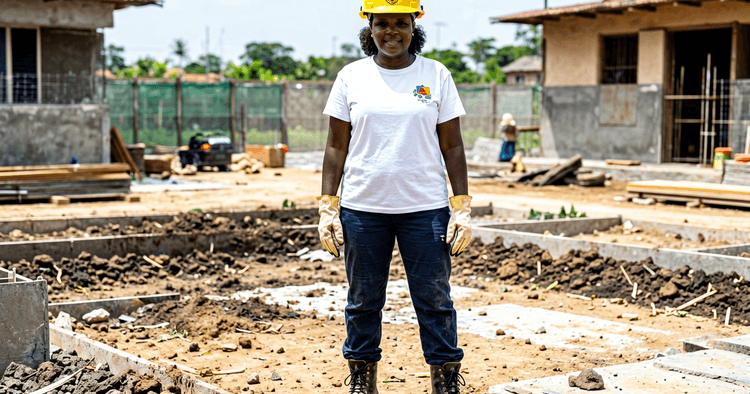
PPE is the equipment that stands between you and workplace hazards: helmets, boots, gloves, safety glasses, harnesses. The sector-by-sector list is not in the general law — it comes from specific legislation and sectoral frameworks issued by the ministers responsible for labour, health, and the sector concerned (Art. 222, no. 1).
The law clearly states who must provide it. Art. 220, no. 7, verbatim: "Whenever necessary, the employer must provide appropriate protective equipment and work clothing to prevent the risk of accidents or harmful effects to the health of workers." If you are asked to pay for your gloves or helmet, the law is not being followed — the company must buy and provide the equipment.
"Necessary" links directly to the risks of your specific role. Everyday examples (not from the text of the law): on a construction site in Maputo, a helmet and boots on site; in a chemical factory, gloves and goggles around toxic products; in electrical work, insulating protection against voltage.
Before PPE comes baseline safety: the employer must take appropriate precautions so that workstations, entrances, and exits are safe and free from risks (Art. 220, no. 6). Equipment never replaces prevention.
The duties of each side
Article 220(3) is clear: look after your own safety and health, as well as that of others who may be affected by your actions or omissions. You must also cooperate with your employer, either individually or through the safety committee.
On the flip side: if you culpably break safety rules — ignoring a harness, bypassing a prohibition sign — you face disciplinary liability, scaled according to the risk you created (Article 220(4-5)). It is fault that is penalized; the sanction matches the actual risk.
In the end, the company provides the right conditions (paragraphs 1, 2, 6, 7) and the worker uses them while following the rules (paragraphs 3, 8).
Information and instruction: what the employer must tell you
Employers must provide good physical, environmental, and moral working conditions, "inform workers about the risks of their workplace and instruct them on the proper compliance with health and safety rules at work" (Article 220(2)). Instruction is part of their duty, not a courtesy.
Pay attention to what the law does not say: it does not set a training frequency or annual hours. What exists is the duty to inform and instruct, tailored to the risks of the job. Be skeptical of "training is up to date" when no one has ever explained your specific role to you.
In practice, this means a short briefing before starting a task: job risks, equipment to use, and what to do in an emergency. A construction site and a chemical lab have different risks; instruction must reflect those differences.
Safety committees: where they are mandatory
A safety committee is the forum where the company and workers talk about risk face to face. They may be established in companies (Article 221(1)) and include worker and employer representatives, with the goal of monitoring compliance with standards, investigating the causes of accidents, and organizing prevention methods (paragraph 2).
Article 221(3) is verbatim — in activities with exceptional risk, the committee is mandatory: "In activities that present exceptional risks of accidents or occupational diseases, such as civil construction, mining, metallurgy, excavation, oil and gas, transport of explosives, electricity, production or use of toxic products, quarries, among others, the creation of workplace safety committees is mandatory."
Two details. The obligation is tied to the activity, not the number of workers: the law recognizes no threshold of "50 workers". A small quarry or an electrical installation company falls under the mandatory rule because of what they do. And if your company has a committee, it is the channel that Article 220(3) designates for collaboration.
On construction sites in Maputo, in the southern mines, at the gas terminals in Beira, the committee must exist. Ask if it exists and whether the worker seats are filled.
First aid and medical check-ups at work
In larger companies, on-site medical assistance is a legal minimum: large employers must provide first aid—directly or through a contracted third party—in case of accident, sudden illness, poisoning, or physical discomfort (Article 223(1)). This rule also applies to employers with a smaller workforce involved in exceptionally high-risk activities (paragraph 2).
Multiple employers can join forces to set up a shared health facility, provided it does not exceed capacity (Article 224). In companies with their own health facility, regular medical examinations check fitness for work, the risk of infectious diseases, and mental health conditions that make employment inadvisable (Article 225(1)).

Imminent danger: what the law says — and what it doesn't
Many people ask: "Can I refuse to work if my workplace is dangerous?" The strict legal answer: Labour Law 13/2023 does not provide an independent right of refusal with guaranteed pay — we checked the text article by article.
What does exist is a two-step process. The first step is to raise the alert: your duty to look after your own safety (Article 220(3)) cannot be fulfilled in silence.
The second step is inspection: in cases of imminent danger to life or physical integrity, "officers of the General Labour Inspectorate may take immediate enforcement measures to prevent that danger, submitting the decision taken to higher confirmation within twenty-four hours" (Article 267(2)).
In between stands the General Labour Inspectorate, which the law tasks with enforcing health and safety standards (Article 222(3)). You can find reporting channels in the inspection and union guide.
If your employer fails to comply: the practical steps
When equipment is missing, instructions are not provided, or a risk persists, there are four steps you can take.
- In writing, to your employer. Send a note or email describing the risk, citing Article 220, and requesting correction. Written notice establishes the date—so no one can later claim they were unaware.
- The committee, if one exists. In exceptionally high-risk activities, a safety committee is mandatory (Article 221(3))—and your duty to cooperate requires you to inform them.
- The General Labour Inspectorate. The supervisory body enforcing health and safety standards (Article 222(3)). Find out how and where to report issues in our practical guide on where to file a report.
- The penalties. An employer's failure to take safety measures in exceptionally high-risk activities "is classified as a serious labour offence and is punishable by a fine and suspension of activity under specific regulations" (Article 220(9)). The law does not state the fine amounts directly; they are set in separate regulations. If an accident has already occurred, the process for compensation is handled separately.
A word of caution: safety is also your responsibility. Culpable violation of safety rules leads to disciplinary liability, proportional to the risk you created (Article 220(4-5)).
How Inademy helps you
If your path leads to another role, Inademy is your starting point: a free profile, simple applications with a PDF CV, and new job alerts via email and WhatsApp.
In an interview, the right question changes everything: what PPE is required for the position, or does the company offer commission? Anyone who replies 'worry about that when you get there' fails the test.
The full overview of your rights is in our practical guide to workers' rights.
Read also
Where these numbers come from
- Law 13/2023 (Labour Law), Official Gazette (Boletim da República), Series I, No. 165, of 25-08-2023, in force since 21-02-2024 (Art. 274: 180 days after publication). The citations transcribe Articles 220 to 225 and 267; phrases in « » are verbatim.
- Verbatim group: Art. 220, Nos. 1, 7 and 9; Art. 221, No. 3; Art. 267, No. 2. The rest is paraphrased.
- Fine amounts and PPE costs: the law does not publish values — it refers to specific regulations. Without a dated source, the data is not included.
- No salary data in this article: all content is the law itself, with exact article and section numbers; construction site, chemical, and electrical examples are practical illustrations, never a legal requirement.
Frequently asked questions
Does the worker pay for PPE?
No. The employer is required to provide protective equipment and work clothing whenever necessary (Article 220, paragraph 7). If you are asked to pay for gloves or a hard hat, this same article applies.
Can I refuse to work if the workplace is dangerous?
The law does not establish an independent right to refuse work with guaranteed pay protection. Instead, it places a duty on you to raise the alarm (Article 220, paragraph 3). In cases of imminent danger, the General Labour Inspectorate has the authority to take immediate action, subject to confirmation within 24 hours (Article 267, paragraph 2).
Which companies must have a safety committee?
Companies operating in exceptionally high-risk activities: civil construction, mining, metallurgy, excavation, oil and gas, transport of explosives, electricity, production or use of toxic products, quarrying, among others (Article 221, paragraph 3). For all other companies, a safety committee is optional (paragraph 1) — the law does not set a minimum number of employees.
What happens if I violate PPE rules?
If the violation is due to your fault, you face disciplinary action, scaled according to the risk you created in the workplace (Article 220, paragraphs 4-5). Any sanction must correspond to the actual risk created.
In imminent danger, who acts first?
First, you: your duty to ensure your own safety requires you to alert your employer and, if one exists, the safety committee (Article 220, paragraph 3). Then, the inspectorate: inspectors can take immediate enforcement measures, submitting the decision for higher confirmation within 24 hours (Article 267, paragraph 2).
In summary, what to do today
- Ask in writing about the risks of your position: the company must inform and instruct you (Art. 220(2)).
- Confirm who provides the PPE: it is the employer's duty (Art. 220(7)) — do not pay for your equipment out of pocket.
- If the company has a safety committee, use it: it is the channel specified by law (Art. 221(2)).
- Imminent danger: warn the employer; if it persists, contact the General Inspectorate of Labour (Art. 267(2)).
- Keep written records of your communications: date, risk, response.
- If leaving is the best path, check the job openings and ask about PPE during the interview.
Your search for "workplace safety in Mozambique" ends here with the complete framework, article by article. The Labour Law 13/2023 guide provides the context; the Inademy guide index connects all topics, from contracts to severance pay.
Official source: Law No. 13/2023 (Labour Law) is available as a PDF on the website of Mozambique's Supreme Court (Tribunal Supremo): official text (PDF).