

Labour Inspection and Unions in Mozambique: Where to Report
Labour inspection in Mozambique: how to report violations, the role of trade unions, and fines of up to 30 minimum wages. A practical step-by-step guide.

The short answer
- Who enforces it: the Labour Inspectorate — the General Labour Inspectorate (IGT) —, which inspects and ensures compliance with Law 13/2023 across the national territory.
- It is your right: the law recognises the worker's right to contact the IGT when their rights are infringed or to report unlawful acts.
- Unions: you have the right to freely join professional organisations — and the company is required to communicate certain decisions to the trade union body.
- Sanctions: violations punishable by a special sanction can cost the company a fine of 20 to 30 sector minimum wages.
- Practical path: speak first with the company, then with the union, and take the case to the provincial labour delegation or to the IGT.
When something in your job feels off — unpaid hours, late wages, a contract that never arrives — it is common to feel there is nowhere to turn. There is.
In Mozambique, labour enforcement is carried out by the General Labour Inspectorate, and the law itself guarantees workers access to this channel. This guide from the Inademy Guide shows who does what, how to report violations, and what to expect at each step.
What the General Labour Inspectorate does
The IGT is the body that inspects and ensures compliance with the Labour Law and other provisions regulating working life. The law also mandates it to report to the competent state bodies any violations whose enforcement does not fall under its remit. In practice: it is the IGT that visits companies, checks records, receives complaints, and enforces the rules.
“It is the duty of the General Labour Inspectorate to inspect and ensure compliance with this Law and other legal provisions regulating aspects of working life, and to report to the competent state bodies any violations regarding rules whose compliance it is not responsible for inspecting.” — art. 267 of Law 13/2023
Its scope extends across the entire national territory, with a structure under the ministry of labour — currently the Ministry of Labour, Gender and Social Action — and provincial delegations. When there is imminent danger to the life or physical integrity of workers, inspection officers may take immediate enforcement measures to prevent that danger, submitting the decision for higher confirmation within 24 hours.
Reporting is a right established by law
It is neither a courtesy from the company nor a favor from anyone: Article 55 of Law 13/2023 recognizes a worker's right to contact the General Inspectorate of Labor or labor jurisdiction bodies whenever their rights are infringed or to report unlawful acts. The same list includes the right to freely join professional organizations — trade unions.
Labor inspectors have free access to companies, and employers are required to cooperate with them. Regarding penalties, the law provides for cases punished with a fine of 20 to 30 minimum wages for the sector of activity — an amount that changes the conversation in any company.
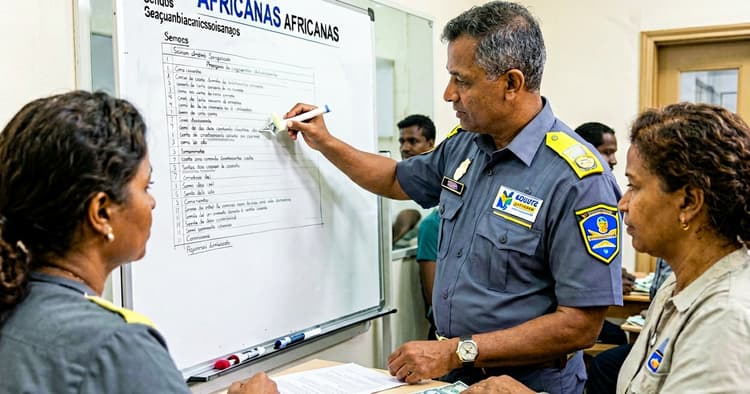
Trade unions and the works council
The law protects trade union freedom and organizes worker representation within the company: the union committee, the right to post union notices, and protection for union officials. In a contract suspension or a termination for business reasons, for example, written communication must also reach the union body or representative union association — it is not optional.
For the employee, the sector trade union is a channel for collective leverage: negotiating improvements, monitoring collective redundancies, and being present when the inspectorate visits the company. If there is no committee in your company, the right of association remains valid — membership is individual and free.
How to report, step by step
- Gather evidence. Keep contracts, receipts, time logs, communications, and messages. The statute of limitations for disciplinary action is six months — deadlines matter.
- Write to the company first. A clear written request to human resources creates a record and often resolves the case.
- Engage union representation. Present the case to the trade union committee or union organization in your sector.
- Take the case to the inspectorate. Go to the provincial labor delegation in your province or the General Inspectorate of Labor, with organized documents and a written summary of the facts.
- Follow the deadlines. After filing the report, stay contactable and follow the process until a decision is made.
The most common cases that reach the inspectorate involve overdue wages, unpaid overtime, contracts not in writing, and dismissals without due process. In dismissals, for example, the law requires written notice to the worker, the union body, and the ministry 30 days in advance — the guide on dismissal: severance pay and just cause lists what must be included.
If inspectors visit the company
Knowing what happens during an inspection visit removes fear and prepares the worker. Inspectors can freely enter the company, examine records — of hours, wages, and contracts — and speak with workers, including privately away from supervisors. Employers are required to cooperate; obstructing an inspection worsens the company's situation.

After the visit, the inspection authority can issue notices, set deadlines for corrections, and impose fines. For the worker, the most important outcome is different: a registered complaint creates a record — and companies with a history of violations are visited again.
Cases where legal evidence protects you
Two legal rules support a worker when filing a complaint. First: evidence gathered through remote surveillance is void unless the worker had prior written notice, except regarding the safety of people and property.
Second: deductions from remuneration are only valid with the worker's written authorization, with the exception of legally mandated deductions such as INSS — the guide to INSS: contributions and protection explains what constitutes a legal deduction.
If the issue concerns working hours — overtime exceeding limits or missing surcharges — preparing the case starts with records: the guide to working hours: 48h and overtime shows which numbers to check. And for the overall picture, the list of worker rights in Mozambique summarizes what the law guarantees.
How Inademy helps you
The best employment dispute is the one that never happens — because the job is compliant from the start. At Inademy, job vacancies are posted by real companies and applications are direct: free profile, PDF CV accepted, and new job alerts via email and WhatsApp. Combined with knowledge of the law, it is the simplest way to choose your next company.
Read also
- Labour Law 13/2023 in Mozambique: what changed
- Employment contract in Mozambique: types and rules
- Probationary period in Mozambique: deadlines and rules
- Sue Your Employer in Mozambique Labour Court: Step-by-Step
Where these numbers come from
- Labour Law, Law No. 13/2023, of August 25 (Official Gazette): Art. 17 (right to contact the inspectorate and right of association), Art. 152 (trade union freedom), Arts. 161-167 (representative structures, trade union committee, posting of notices, and protection), Arts. 262 and 267 (scope and powers of the General Labour Inspectorate, immediate measures in case of imminent danger), Art. 269 (fine of 20 to 30 sector minimum wages). In force since February 21, 2024.
- Ministry of Labour, Gender and Social Action (mtgas.gov.mz): official statement on the operations of the General Labour Inspectorate.
What an inspection action can achieve
When the Labor Inspectorate takes action, it can inspect the premises, hear workers and the company, and demand the immediate correction of violations. It is the most direct tool to put an end to illegal conditions.
If the inspectorate fines the company, the amounts can be substantial. In practice, this pressures the company to respect the rights that workers had lost.
Frequently asked questions
Can I be dismissed for reporting the company?
The right to contact the inspectorate or report illegal acts is part of the legal list of worker rights. A retaliatory dismissal can be challenged — if it is unlawful, it gives the right to reinstatement or compensation of 45 days of salary per year of service.
Do I need a lawyer to file a report?
It is not mandatory. A report to the inspectorate is made by the worker themselves, with organized evidence. A lawyer or union support helps in complex cases, such as collective redundancies or workplace accidents.
How much time do I have to file a claim?
Deadlines matter and vary depending on the case: the company's disciplinary authority expires in six months. The sooner the case reaches the inspectorate, the easier it is to gather evidence — receipts, records, and witnesses get lost over time.
What is the difference between the inspectorate and the court?The inspectorate supervises, receives complaints, and can apply administrative sanctions — fines of 20 to 30 sector minimum salaries for certain violations. Labor courts resolve disputes with outcomes such as reinstatement and payment of compensation. Often, the inspectorate is the first step.
Can the inspectorate shut down an activity?
In case of imminent danger to the life or physical integrity of workers, inspection agents can take immediate action to prevent the danger, subject to confirmation by higher authority within 24 hours.
What evidence should I bring when filing a report?
Contract, pay slips, time records, written communications, and your narrative of the facts in chronological order. Evidence from remote surveillance without written notice is void — and that works in your favor when the company tries to use it against you.
In summary, what to do today
- Organize your employment documents in a single place, physical or digital.
- If there is a violation, start with a written request to the company — create a record.
- Contact the union committee or the trade union organization in your sector.
- If you receive no response, take the case to the provincial labor delegation or the IGT.
- If you are looking for a company that complies with the law, search for job openings on Inademy and activate WhatsApp alerts.
Official source: Law No. 13/2023 (Labour Law) is available as a PDF on the website of Mozambique's Supreme Court (Tribunal Supremo): official text (PDF).