

Working Hours in Mozambique: 48h and Overtime
Working hours in Mozambique: 48 hours per week, with legal limits and surcharges for overtime and night shift work. See articles of Law 13/2023.
The short answer
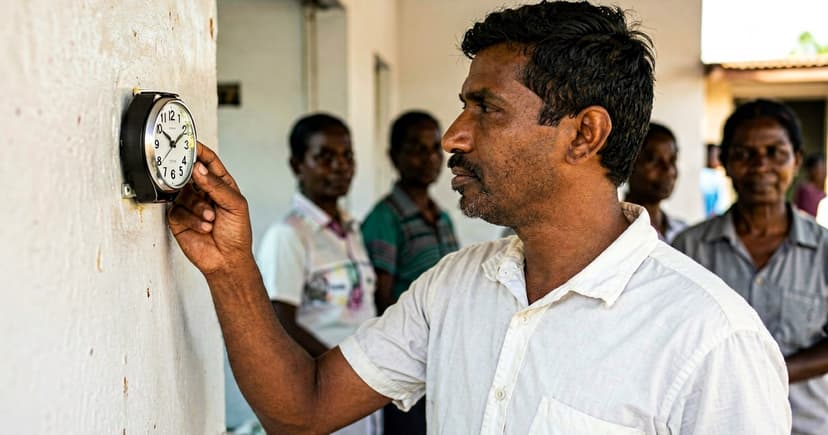
- Legal working hours: working hours are 48 hours per week and eight hours per day (Art. 93 of Law 13/2023). In practice, six workdays with one rest day.
- Overtime: only counts as overtime when performed outside agreed hours. The limit is 8 hours per week, 96 per quarter, and 200 per year.
- Surcharge: the law requires paying overtime with a 50% surcharge (Art. 125); night work receives 25% extra.
- Weekly rest: at least 24 consecutive hours, usually on Sunday (Art. 104).
- Record keeping: the employer must maintain a registration system for overtime hours — without records, it becomes difficult to prove what you worked.
If you work in Mozambique, your workweek generally cannot exceed 48 hours. This is established by Article 93 of the Labor Law, Law No. 13/2023, in effect since February 2024.
But the number alone does not resolve daily questions: how many overtime hours you can work, how much you should be paid for them, and what happens when the company ignores the limits. In this guide from Inademy's Guide, we go through what the law requires, with real numbers and the correct articles.
What the law establishes: 48 hours per week
The standard workweek is 48 hours per week and eight hours per day. The monthly average used to calculate rates is 208 hours — 48 hours multiplied by 52 weeks, divided by 12 months. For eight-hour workdays, this equates to 26 days per month.
Two useful figures can be derived from the monthly salary to negotiate or verify your payslip:
- Hourly rate: monthly salary divided by 208.
- Daily rate: monthly salary divided by 26.
An example with the banking sector's minimum wage in 2026, which is 20,361.43 MT: hourly, it is 97.89 MT; daily, 783.13 MT. In another sector, such as manufacturing, the minimum is 10,622.50 MT — 51.07 MT per hour and 408.56 MT per day. The full table is available in the minimum wage in 2026, sector by sector guide.
The average duration of 48 hours is calculated with reference to periods of up to six months. This allows working hours in a specific week to exceed 48 — provided that, on average over the period, they remain within the legal limit.
The absolute cap is 56 weekly work hours, and not all hours count toward this limit: exceptional and overtime work performed due to force majeure is excluded.
Overtime: limits and legal pay
Overtime work is work performed outside regular hours. The law does not prohibit it — it regulates it. The limits are clear:
- 8 hours per week, maximum;
- 96 hours per quarter;
- 200 hours per year.
There are two situations that do not count as overtime: work by an employee exempt from fixed working hours (management and executive roles, for example) and work performed to make up for absences on your own initiative — an unexcused absence day, for instance.
How much is overtime worth? Article 125 is literal:
«Overtime work must be paid an amount corresponding to normal work compensation, increased by fifty percent if performed up to 24:00, and by one hundred percent beyond 20:00 until the start of the normal working period the following day.»
In practice, the 50% rate covers most situations: overtime worked up to 24:00. Using the banking sector example, the standard hourly rate of 97.89 MT increases to 146.84 MT for overtime.
In manufacturing, 51.07 MT rises to 76.61 MT. When overtime extends into the night, beyond 20:00 until the start of the next day's normal working period, the surcharge is 100% — the hour becomes worth double.
Exceptional work — which arises due to force majeure, disaster, or another event beyond the company's control — has its own rules: compensation with a 100% surcharge, regardless of the time it occurs.

Night work is worth 25% extra
Those who work at night receive their own surcharge. Article 125 requires night work to be compensated with a 25% surcharge relative to the pay of corresponding day work.
Using manufacturing numbers: the standard hourly rate of 51.07 MT becomes 63.84 MT on night shifts. It does not replace overtime pay — they are separate systems. If your night hour is also overtime, the rules for each apply depending on the specific situation.
Weekly rest and breaks
Weekly rest must be at least 24 consecutive hours, usually on Sunday. The law allows this day to differ from Sunday under specified circumstances — such as rotating shifts and continuous operations — but the 24 consecutive hours are non-negotiable.
Under shift rotation, used in continuous operations, the daily workday can increase up to 12 effective hours, with a break of at least 30 minutes, and total rest cannot be less than half of the actual working time. Important to note: this rest does not replace annual leave. Vacation rules are covered in the vacation in Mozambique: days and rules guide.
Time tracking: the company must have it
The employer must, in all cases, maintain an overtime work tracking system. This detail settles entire disputes. If overtime hours are not registered, the payslip will not reflect the surcharge, turning discussions with the company into your word against theirs.
Keep your own records: dates, entry and exit times, and what was verbally agreed upon with your supervisor. The list of workers' rights in Mozambique includes daily and weekly rest — and time tracking is what makes them verifiable.
If the company exceeds the limits
First, the internal route: submit your time log to your supervisor or HR and request regularization. Wages cannot be subject to deductions without written authorization — and overtime pay is legally owed, not a favor.
If there is no response, the law provides a pathway: you can contact the General Inspectorate of Labor whenever your rights are infringed upon. The Labor Inspection and trade unions: where to report violations guide explains the specific steps. And if the problem stems from how the contract was drafted, it is worth reviewing contract types in the employment contract in Mozambique guide.
How Inademy helps you
Knowing your working hour limits is half the battle. The other half is working in a job that respects them. On Inademy, you can find job openings from companies across all sectors, including detailed conditions and salaries when disclosed.
Creating a profile is free, accepts your CV in PDF format, and allows you to enable email and WhatsApp alerts for new job postings — saving you time from constantly refreshing chat groups.
Read also
- Labor Law 13/2023 in Mozambique: what changed
- Probationary period in Mozambique: deadlines and rules
- Night Work in Mozambique: Pay, Holidays and Weekly Rest
Where these numbers come from
- Labor Law, Law No. 13/2023, of August 25 (Official Gazette): Art. 93 (48-hour workweek), Art. 96 (maximum duration and shift rotation), Art. 99 (overtime and limits of 96h/quarter, 8h/week, 200h/year), Art. 104 (24-hour weekly rest), Art. 125 (surcharges of 50%, 100%, and 25%). In effect since February 21, 2024.
- 2026 Minimum wages: table effective since April 1, 2026, published in the Official Gazette and reported by AIM on April 28, 2026. Hourly and daily rates calculated based on a monthly average of 208 hours.
Frequently asked questions
Can I be forced to work overtime?
Employers may request overtime work within legal limits — 8 hours per week, 96 per quarter, 200 per year. Beyond these limits, it cannot be mandated. Exceptional work due to force majeure is the specific exception provided for in the law.
How much is my overtime hour worth?
Divide your monthly salary by 208 to determine your standard hourly rate. Overtime worked up to 24:00 is worth that rate plus 50%. In the banking sector, with a minimum wage of 20,361.43 MT, the standard hourly rate is 97.89 MT and overtime increases to 146.84 MT.
Do night shifts pay more?
Yes. Night work carries a 25% surcharge on top of daytime work compensation. This is governed by Article 125 of Law 13/2023.
Can I refuse overtime beyond the limit?
Legal limits (96 hours per quarter, 200 per year) represent the cap imposed by law. Working hours beyond the legal limit is not a contractual obligation — it is a violation of the law. If pressured, your written time records serve as proof.
Does overtime count toward vacation allowance calculations?
Vacation allowance is based on the compensation owed to you. What counts toward the calculation base depends on your contract and company practice — if overtime is regular and recorded on payslips, it is easier to include. The salary allowances in Mozambique: meal, transport, and 13th month guide details this topic.
Do the 48 hours include the lunch break?
No. Working hours only count actual work time. Under shift rotation, the law mandates a break of at least 30 minutes, and rest cannot be less than half of actual work time.
In summary, what to do today
- Check your contract and payslip to see how many hours you work per week and how overtime is recorded.
- Calculate your hourly rate (monthly salary divided by 208) and compare it with your overtime pay.
- If surcharges are missing, submit your time log to HR in writing.
- If you receive no response, contact the General Inspectorate of Labor or your sector's trade union.
- If you are looking for a new job, create your profile on Inademy and turn on new job alerts via WhatsApp.
Official source: Law No. 13/2023 (Labour Law) is available as a PDF on the website of Mozambique's Supreme Court (Tribunal Supremo): official text (PDF).