

Trade unions in Mozambique: how they work and why
Trade unions in Mozambique: freedom of association, single committee, dues by signed list, and protection against retaliation under Law 13/2023.
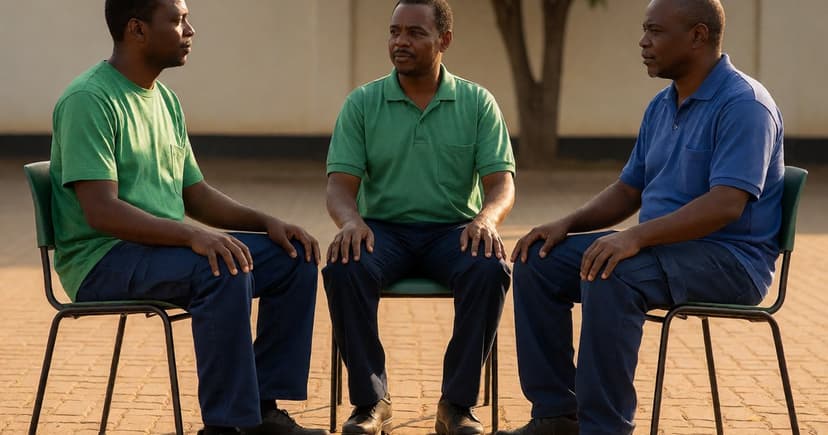
If you arrived at the Inademy Guide searching for trade unions in Mozambique, here is the answer: Law 13/2023 guarantees freedom of association — joining or not is your decision, prohibited from becoming a ground for dismissal — and organizes representation within the company into four structures: union delegate, union or company committee, trade union, and general confederation (art. 161).
The trade union is your collective voice at work: it negotiates company agreements, monitors dismissals, provides opinions in disciplinary proceedings, and collaborates with the General Labour Inspectorate. This guide shows how it is established, what it does, how dues are paid, and what the company cannot do to you for being — or not being — unionized.
The short answer
- Freedom of membership: you are free to join or not join a union, and any discrimination due to lack of affiliation is prohibited (art. 153).
- Dues: no one is required to pay dues to a union they are not enrolled in; union members pay according to the bylaws, through payroll deduction via a signed nominal list (art. 153).
- A single committee: there can only be one union committee per company; if workers belong to different unions, the committee is allocated proportionally (art. 153).
- No union body? Union rights pass to the higher union body or to a workers' committee elected in a general assembly called by a minimum of 20% of the workers (art. 161).
- Meetings: at the workplace, in principle outside working hours; with prior agreement from the employer, during working hours; minimum 24-hour advance notice (art. 165).
- Protection: dismissal due to union affiliation is unlawful (art. 75); the law protects union office holders (art. 167).
What a trade union is — and what it is for
A trade union is an association of workers for the promotion and defense of their rights, social, and professional interests (art. 161).
The general assembly, executive board, and supervisory body form part of its governing bodies (art. 159), and the bylaws — registered with the central body of the labour administration — define how membership is acquired and lost, members' rights and duties, and the leaders' term of office (art. 157).
In practice, the union defends you in three ways: it collectively negotiates instruments that improve salaries and working conditions across the sector; it provides economic, legal, and social support to members (art. 162); and it monitors individual cases — from dismissal to disciplinary proceedings, where it submits a mandatory opinion in the file — the steps are in the disciplinary proceeding guide.
Mozambique has sector-specific trade union organizations (banking, teachers, miners, fishermen) and national trade union confederations, with the Organização dos Trabalhadores de Moçambique (OTM) as the country's historic central organization. The one relevant to you is the one in your sector: it establishes the collective bargaining agreements where you work.
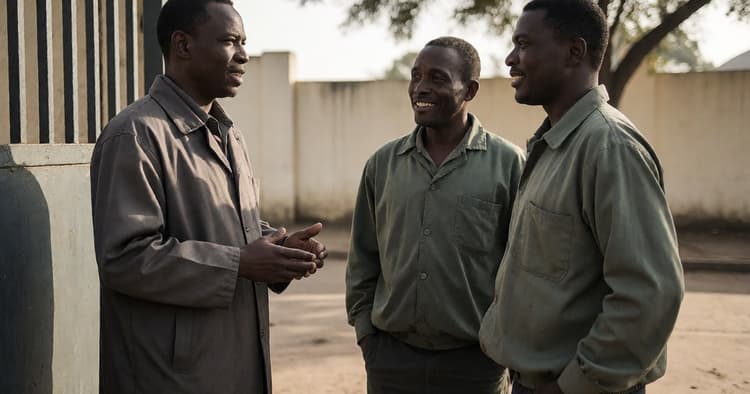
The four representation structures (art. 161)
The law organizes worker representation into four levels, from smallest to broadest:
- Union delegate — representative body for workers in small companies, where a full committee is not justified;
- Union or company committee — grassroots body representing the union within the establishment or company;
- Trade union — the association of workers within a sector or profession;
- General confederation — national association of trade unions.
Members of the union committee are elected at a meeting of workers who are members of the respective union, from among the company's employees (art. 163). And where no union body exists, union rights pass to the immediately superior union body — or to a workers' committee elected in a general assembly specifically convened for that purpose by a minimum of twenty percent of the total workforce (art. 161).
How a trade union is established
Legal personality is established upon registration of the bylaws with the central body of the labour administration (art. 154). The application, addressed to the minister responsible for labour affairs or their delegate, includes the minutes of the constituent assembly, attendance list, bylaws, certificate of name availability, and proof of publication of the meeting notice (art. 155).
Registration is completed within 30 days from filing, and the bylaws are subsequently published in the Boletim da República (art. 158). Without submitting the identification of the governing body members, acts performed by these bodies are invalid (art. 159) — formal compliance is essential to validity.
Union dues: who pays, who does not pay
Here is one of the most useful rules of the new law: workers are not required to pay dues to a union they are not enrolled in, and any collection system that infringes upon workers' rights and freedoms is unlawful (art. 153). Membership is voluntary — and so is leaving.
For union members, dues are paid according to the bylaws. Payroll deduction by the employer requires an extra step: the union committee must submit in writing a nominal list of unionized workers, signed by each worker (art. 153). In practice: no one deducts dues from your salary without your signature on the list — and if you find an unauthorized deduction, request a refund and lodge a complaint.

What the union committee does inside the company
The union committee represents company workers before the employer in negotiating company agreements and discussing socio-professional issues (art. 163).
However, the law also assigns it roles in specific procedures: the statement of charges (nota de culpa) and the decision in disciplinary proceedings are forwarded to the union committee; contract terminations and suspensions for company reasons are communicated to the union body; and collective dismissals are negotiated in its presence.
On a day-to-day basis, the committee also holds notice posting rights: unions may post notices, meeting calls, and union information in accessible areas at the workplace for all workers, and arrange for their distribution (art. 166).
Union meetings take place at the workplace, generally outside working hours; with prior employer agreement, during working hours; and all meetings must be communicated with a minimum of 24 hours' notice (art. 165). Time off allowances for union officers are set out in collective bargaining agreements.
Protection against retaliation
Dismissal for political reasons or union membership is unlawful (art. 75) — and unlawfulness grants reinstatement or compensation — the amounts are in the dismissal guide.
The law also protects union officers against transfer or disadvantage resulting from the exercise of their mandates (art. 167), and prohibits interference by employers and public authorities in union management and organization, as well as reciprocal financing.
If you face retaliation for union activity — shift cuts, marginalization, dismissal — the path is the same as for other rights: written record, union, inspectorate, court.
To locate each right in the legal text, the workers' rights guide lists them article by article, and the new labour law guide summarizes what changed in 2024. The labour inspectorate and trade unions guide details the reporting steps.
How Inademy helps you
You know your rights; now you just need to find an employer who respects them. On Inademy, job vacancies are posted by real companies, applications are direct, profiles are free, PDF CVs are accepted, and new job alerts are sent via email and WhatsApp. Check out the job vacancies in Mozambique and apply with confidence.
Read also
- Employment contract in Mozambique: types and rules
- Probationary period in Mozambique: deadlines and rules
- Right to strike in Mozambique: how it is declared, limits
Where these figures come from
- Law No. 13/2023, of August 25 (Labour Law), Boletim da República, I Series — articles 17 (right of association and addressing the inspectorate), 150 (objectives of trade union organizations), 153 (freedom of membership and collection of dues), and 154-160 (establishment and registration).
- In the same legislation: 161 (representative structures), 162 (union duties), 163 (union committee responsibilities), 165 (meetings), 166 (posting notices and union information), 167 (protection of officers), 70 and 76 (participation in disciplinary and appeal processes), and 75, paragraph a) (unlawfulness of dismissal due to union membership);
- Full review of the legal text published in the Boletim da República for this guide.
Frequently asked questions
Am I required to join a union to work?
No. Membership is voluntary and the law prohibits any discrimination due to lack of affiliation (art. 153). You are also not required to pay dues to a union you are not registered with — deductions without your signature on the nominal list are unlawful.
How many union committees can a company have?
Only one (art. 153, paragraph 3). If workers belong to different unions, the committee is established based on proportional representation criteria, to be regulated under a collective bargaining instrument.
What does the union committee do for me?
It negotiates company agreements, receives statements of charges and decisions in disciplinary proceedings, monitors terminations and collective dismissals, posts union information, and represents workers in discussions of company issues (arts. 163 and 166).
Can I be dismissed for being a union member?
Not legally: dismissal due to union affiliation is unlawful (art. 75), which allows for legal challenge in the labour court and reinstatement or compensation. Retaliation against union officers is also prohibited by law.
How is a trade union created in Mozambique?
Through a constituent assembly, bylaws, and registration with the central body of the labour administration, which decides within 30 days; the bylaws are published in the Boletim da República (arts. 154-158). Application requirements are set out in Article 155 of Law 13/2023.
Can union meetings be held during working hours?
In principle, outside regular working hours. During working hours, it is possible with prior employer agreement (art. 165), and all meetings must be communicated to the employer and workers with a minimum of 24 hours' notice.
In summary, what to do today
- Find out which trade union serves your sector and request its bylaws and membership conditions.
- Check whether your company has a union committee — and who the officers are.
- Check your payslip: dues can only be deducted with your signature on the nominal list.
- If there are irregularities in deductions, complain in writing to your employer and the union.
- Facing retaliation or dismissal for union activity? Gather evidence and report the case to the inspectorate.
- Strengthen your position in the job market with an updated CV — the Inademy profile is free.
Official source: Law No. 13/2023 (Labour Law) is available as a PDF on the website of Mozambique's Supreme Court (Tribunal Supremo): official text (PDF).