

Job Interview Questions and How to Answer Them
The 10 most common job interview questions in Mozambique and how to answer them with context, action, and result, with ready-to-use examples. A practical guide.

Preparing the top interview questions and answers changes the outcome to secure your next job in the Mozambican market. When you arrive at a job interview, the recruiter evaluates your demeanor, communication clarity, and company fit. Knowing exactly how to answer and what to say in the interview removes the weight of anxiety the moment you enter the room.
In the Inademy Guide, we analyze the most frequent interview questions in Mozambique, providing sample answers and practical strategies. Whether you are applying for the financial sector in Maputo or operational projects in Cabo Delgado, this guide offers the necessary preparation for you to excel.
The Short Answer
If you have an interview coming up soon and need quick preparation, check out the summary of essential points:
- The Golden Rule: Structure your answers using the Context-Action-Result (CAR) technique. Keep each response between 30 to 60 seconds with a professional focus.
- 1. Tell me about yourself: Summarize your technical background and explain how your skills add immediate value to the company.
- 2. Why do you want this job?: Demonstrate concrete knowledge about the organization's operations and projects in Mozambique.
- 3. Strengths and weaknesses: Present relevant professional qualities and show how you actively work to overcome a real limitation.
- 4. Why did you leave your last job?: Focus your response on seeking growth and new challenges, while maintaining complete respect for past employers.
- 5. Salary expectations: Indicate a realistic salary range based on current industry standards and net salary calculations.
- 6. Availability: Confirm your readiness while respecting the legal limits of Article 93/1 of Law 13/2023 (48 weekly hours).
- 7. Where do you see yourself in 5 years?: Align your career growth ambitions with the company's long-term goals.
- 8. What questions do you have?: Ask about the team's routine, department goals, or internal culture.
- 9. How do you handle pressure?: Share a practical example of organization and prioritization under tight deadlines.
- 10. Do you have experience in this area?: Connect previous projects, training, or transferable skills to the requirements of the role.
How to prepare your answers
To stand out in a selection process, you should not memorize canned responses or answer robotically. The secret to knowing how to answer lies in structuring your ideas logically. The methodology recommended by recruitment experts is the CAR framework (Context, Action, and Result).
In this approach, you start by briefly describing the situation (Context), detail the action you took (Action), and conclude with the outcomes achieved by the team (Result). Each answer should last between 30 to 60 seconds. This brevity demonstrates your ability to summarize key points and think clearly.
When preparing your answers, think of examples from your work history. Sharing a practical example from your professional experience builds credibility and helps the interviewer see what you can deliver to the organization.
Recent data from the DataReportal 2026 report indicate that there are around 19.1 million active mobile connections in Mozambique, accounting for 53.1% of the population. With about 19.1 million mobile subscriptions (53.1% of the population) and 4.1 million social media user identities (11.4%), your mobile phone is the ideal tool for researching the company the day before and reviewing your notes.
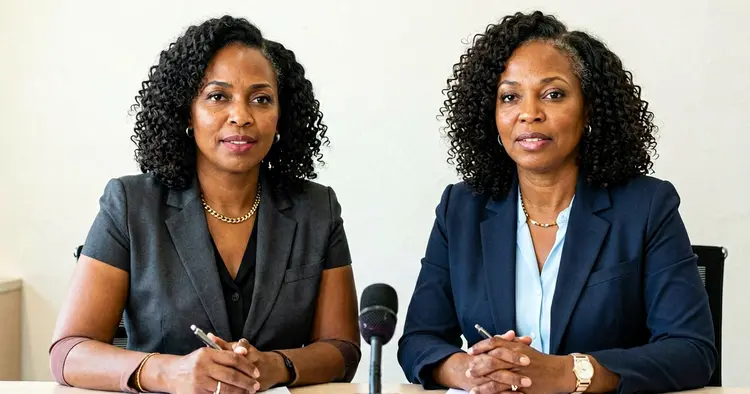
The 10 most common questions and how to answer them
Below is a detailed breakdown of the most common job interview questions in Mozambique, along with sample answers and key recommendations for framing your responses.
1. "Tell me about yourself"
Sample answer: "I am an accounting professional with over four years of experience managing accounts payable and tax compliance. In my last role, I optimized the bank reconciliation process, reducing errors by 20%. I am seeking this opportunity to apply my analytical skills within a growing team."
When addressing this question, avoid narrating your personal life or childhood. The interviewer wants to understand your professional identity, your main technical achievements, and why your profile fits the company's current needs.2. "Why do you want this job?"
Sample answer: "I have been following your company's expansion in the Mozambican logistics sector and admire your focus on operational innovation. I believe my experience in inventory management and route coordination will make immediate contributions to the team's efficiency goals."
To answer well, research the company's history, recent projects, and values beforehand. Show that your application is a deliberate choice rather than a random resume submission."
3. "What are your strengths and weaknesses?"
Sample answer: "My greatest strength is organization and consistently meeting strict deadlines under pressure. As an area for improvement, I sometimes struggle to delegate tasks because I want to oversee every detail. However, I have been working on this by adopting shared management tools."
Choose strengths relevant to the role. When mentioning a weakness, share a genuine professional trait, but immediately explain the concrete steps you are taking to improve."
4. "Why did you leave your last job?"
Sample answer: "I had a valuable learning experience at my previous company, where I developed solid skills. However, I am now looking for a new professional challenge that allows me to take on greater responsibilities and work on larger-scale projects."
Always maintain a respectful tone toward former employers, colleagues, or managers. Focusing your response on seeking professional growth shows maturity and strong work ethics."
5. "What are your salary expectations?"
Sample answer: "Based on my experience and the responsibilities of the role, I consider a gross salary range between 15.000 MT and 18.000 MT appropriate, aligned with the sector minimum for this position. However, I am open to negotiating the overall benefits package offered by the company."
To answer with confidence, you must understand the current Mozambican labor market. In 2026, sector-specific minimum wages in Mozambique serve as a legal reference baseline:
- Civil construction: 8.652,00 MT
- Hospitality and tourism: 10.600,00 MT
- Manufacturing industry: 10.622,50 MT
- Banking and insurance: 20.361,43 MT
- Public sector: 8.758,00 MT
- Private security: 8.690,00 MT
Remember to calculate the net amount before your conversation. Under local law, gross salary is subject to a mandatory 3% INSS contribution and IRPS withholding tax (ranging from 10% to 32%). Article 124.º of Law 13/2023 establishes that total deductions cannot exceed one third of earnings.
For example, a gross salary of 10.622,50 MT in manufacturing has a deduction of 318,68 MT for INSS (leaving 10.303,82 MT) and an estimated IRPS deduction (~1.030,38 MT), resulting in an approximate net pay of 9.273,44 MT. If you want to break down these calculations, read our article to understand the difference between net and gross salary in Mozambique.
For a detailed view of the legal tables by sector, check the minimum wage table by sector in Mozambique. If you want to analyze specific roles, see the example for driver salary in Mozambique.
6. "What is your availability to start?"
Sample answer: "I am available to start immediately. If I need to serve a notice period at my current job, I can coordinate with the company to agree on a start date that respects that process alongside my employer."
Mozambique's Labor Law (Law 13/2023), Article 93.º/1, sets the maximum limit of normal working hours at 48 hours per week. Show flexibility in adjusting schedules within legal limits.
7. "Where do you see yourself in 5 years?"
Sample answer: "Five years from now, I see myself as an established professional within this organization, taking on higher-complexity projects and helping train new team members."
Recruiters want to assess your long-term commitment and see if your personal plans align with the company's growth.
8. "What questions do you have for us?"
Sample answer: "I would like to know the main challenges the team is currently facing and the key success metrics for this role during the first six months."
Asking questions demonstrates genuine interest in the role and professional initiative. Never say you have no questions to ask.
9. "How do you handle pressure or stress?"
Sample answer: "I tackle pressure by setting clear priorities and breaking complex projects down into smaller steps. As a practical example, during a recent audit, I restructured the team's work schedule to meet the legal deadline without compromising quality."
Show emotional intelligence, a focus on practical solutions, and resilience when faced with workplace setbacks.
10. "Do you have prior experience in this field?"
Sample answer: "While this is my first direct transition into this role, I built three years of experience in client management, developing negotiation, communication, and data analysis skills that apply directly to this position."
If you lack direct experience, highlight your transferable skills, completed technical courses, and relevant academic projects.
Also read
- The mistakes that get your CV rejected (and what to put instead)
- How to Create a CV on Your Phone in Mozambique (Step-by-Step)
Tough questions: what to do when you don't know
During an interview, a question may come up about a technical tool or process you are unfamiliar with. The biggest mistake in this situation is making up an answer or trying to bluff the interviewer.
The best approach relies on three steps: honesty, asking for context, and a willingness to learn. Be upfront about not knowing the specific topic, but explain how you would solve the problem using your current knowledge.
You can answer along these lines: "I don't have direct experience with that specific software, but I am proficient with similar tools in the same category. I am a quick learner and can master this system rapidly using technical documentation."
Questions you should ask at the end
At the end of the conversation, when the recruiter asks what to say in the interview or if you have any questions, you should present two or three prepared questions. This reinforces your proactive profile.
Here are recommended options for you to use:
- "What is the team's day-to-day work environment like?"
- "What are the immediate priorities for the person taking on this role?"
- "Does the company offer continuous training opportunities for employees?"
- "What are the next steps in the selection process?"
Personal data protection and uncomfortable questions
In Mozambique, legislation protects workers' right to privacy. Article 8 of Law 13/2023 establishes clear rules on the protection of personal data and safeguarding the applicant's private life.
Questions regarding religious beliefs, political affiliation, marital status, maternity plans, or sexual orientation belong to the private sphere. The law protects your personal data: Art. 8, No. 3, of Law 13/2023 prevents the data you hand over to an employer from being provided to third parties without your express consent.
If you encounter an invasive question, the best strategy is to remain calm and respond without direct confrontation. You can handle the situation by focusing your answer on the professional scope:
"At this moment, I prefer to focus on my technical skills and my professional availability to meet the objectives defined for the role."
How Inademy helps you
Inademy is the reference portal for professionals looking to enter or advance in the Mozambican job market. We provide practical resources to support every stage of your job search.
On our portal, you can browse daily for free updated job vacancies in Mozambique across various sectors. Our Inademy career guide portal brings together expert advice on recruitment processes.
To strengthen your preparation, read our complete job interview guide in Mozambique, where you will find guidance from initial research up to interview day. We also recommend structuring your application documents with our guide to making a CV in Mozambique and writing a tailored professional cover letter.
Where these numbers come from
The information presented in this guide is based on official sources and verified data from the Mozambican market:
- Minimum Wages 2026: Figures set in the adjustment published by the Mozambique Information Agency (AIM) and the National Institute of Social Security (INSS).
- Labor Legislation: Law No. 13/2023, of August 25 (Mozambique Labor Law), regulating the weekly working hours limit (Article 93.º/1), wage deductions (Article 124.º), and personal data protection (Article 8.º).
- Connectivity Statistics: DataReportal Digital 2026 report for Mozambique, indicating 19.1 million mobile connections (53.1%) and 7.1 million internet users (19.8%).

Frequently asked questions
How should I answer the question "tell me about yourself"?
Answer by summarizing your career history, your main technical skills, and the most relevant results achieved in previous roles. Always link your experience to the requirements of the open position.
How do I answer salary expectation questions in an interview in Mozambique?
Research the current minimum wage tables by sector and provide a realistic gross salary range. Consider the mandatory 3% INSS contributions and IRPS tax withholding to estimate the final net amount.
What should I not say during a job interview?
Avoid criticizing former bosses or colleagues, showing a lack of punctuality, demonstrating complete ignorance about the company, or inventing work experience you do not have.
How should I respond if I do not know the answer to a technical question?
Be honest. Admit that you are not familiar with that specific concept, but explain the logic you would use to solve the problem and highlight your ability to learn quickly.
Can I ask the recruiter questions at the end of the interview?
Yes, you should ask questions. Questions about the department's day-to-day work, role challenges, or company projects demonstrate genuine interest and professional preparation.
In summary, what to do today
To ensure success in your next interview, follow these practical preparation steps:
- Review your resume: Identify the most important milestones in your career to use as practical examples in your answers.
- Practice the CAR framework: Practice short answers of 30 to 60 seconds focusing on context, action taken, and results achieved.
- Research the company: Visit the organization's website and social media channels to understand ongoing projects in the national market.
- Calculate salary figures: Set your expectations based on industry benchmarks and statutory INSS and IRPS deductions.
- Simulate the interview on your phone: Record your voice answers on your mobile phone to evaluate your clarity and communication pace before the in-person or online meeting.
Official source: Law No. 13/2023 (Labour Law) is available as a PDF on the website of Mozambique's Supreme Court (Tribunal Supremo): official text (PDF).