

Healthcare and Pharmacy Careers in Mozambique
Mozambique healthcare careers: 2026 nurse and doctor salaries, entry training, public vs. private vs. NGO roles, and where the openings are.

The Short Answer
- Market ranges (WageIndicator, 2026): nurses between 20,524 and 52,640 MT/month; general practitioners between 26,501 and 67,344 MT/month.
- Where earnings are highest: specialization, referral centers, NGOs, and the private sector in major cities.
- Minimum qualifications: nursing and health technology require a mid-level diploma; medicine requires a bachelor's degree and internship.
- Public vs. private: the public sector offers stability and structured pay grade progression; private institutions and NGOs offer higher top-tier pay.
- Structural demand: rural and district health posts face chronic staffing shortages — there are job openings outside Maputo every year.
Building a healthcare career is one of the few choices where vocation and stability go hand in hand in Mozambique.
Central, district, and rural hospitals, private clinics, and healthcare NGOs hire nurses, technicians, and doctors every year — and the field offers clear paths for career progression. This guide from Inademy Guide covers real salary ranges, required qualifications, and main entry points.
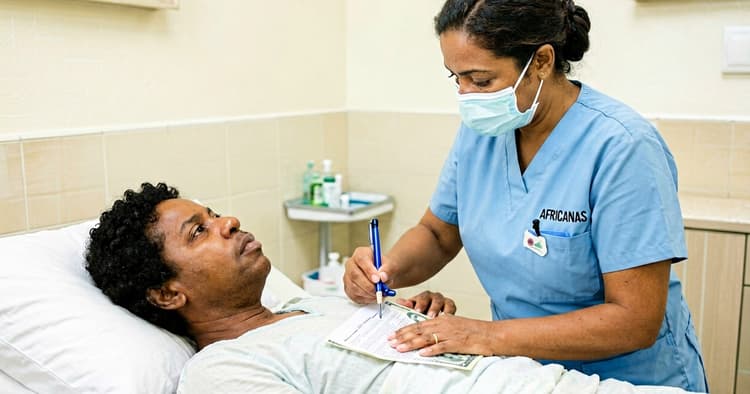
How much a healthcare professional earns
The market ranges published by WageIndicator in 2026 for Mozambique are as follows:
- Nurses: from 20.524 to 52.640 MT per month;
- General practitioners: from 26.501 to 67.344 MT per month.
These figures cover the general market — public hospitals, private clinics, and non-governmental organisations. For comparison: the public service minimum is 8.758 MT, but a state healthcare professional is, in practice, well above this floor — career salary is calculated by the pay bracket and sector allowances.
Three factors push the salary to the top of the range: specialisation (obstetrics, surgery, maternal health), experience in referral facilities, and the employer — private clinics in major cities and NGOs with funded projects pay above average. The logic of deductions applies equally here; the net vs gross salary guide shows what remains of each offer.
Training programmes and entry pathways
The sector has three main entry points:
- Mid-level health courses (technical level): train health technicians, midwives, pharmacy technicians, and laboratory technicians — the backbone of district health centres;
- Bachelor's degrees in nursing and related fields: public and private universities, with the role of general nurse as the classic career outcome;
- Medicine: medical degree, followed by an internship and, for those who progress, specialization.
A practical path for anyone making a choice: mid-level courses offer the fastest entry route into the job market — many districts hire technicians directly — and allow you to resume your education later to advance to higher qualifications. The first job CV guide shows how to present internships and clinical practice on your first resume.
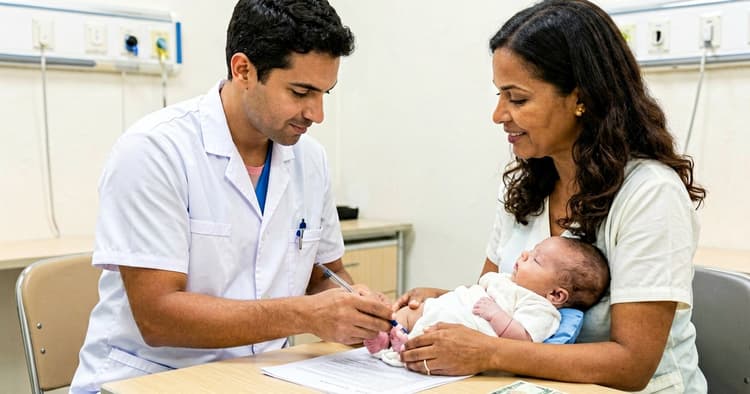
Public, private, or NGO?
Each sector has its own logic:
- Public service: career salary with allowances (hazard, meal, performance) and pay grade progression; stability is the main strength, and placement in rural posts is often the first destination;
- Private sector: private clinics and hospitals in Maputo, Matola, Beira, and Nampula negotiate salaries individually, tending to pay above average for specialties;
- NGOs and international organizations: externally funded health projects hire using their own pay scales — these are by far the highest salaries in the sector, especially for English speakers.
It is worth knowing the general rules that apply to any employer: the guide on what Law 13/2023 changed summarizes contracts, leave, and time off — including 90-day maternity leave, most of which is paid by the INSS.
Where the vacancies are
Structural demand lies outside capital cities: districts and rural posts face a chronic shortage of qualified staff and open recruitment drives every year. For those looking to get hired quickly, being flexible about the province is the strongest competitive advantage — and district-level experience counts later toward future roles and specializations.
In the private sector and NGOs, vacancies circulate mostly through direct job listings and professional networks. Set up province-based alerts in your healthcare field and check job vacancies in Mozambique on Inademy to keep track of openings near you.
Career and progression
Progression in healthcare combines length of service, additional training, and performance. Nurses who specialize in maternal health or management advance in rank; technicians who resume their studies become nurses; doctors who specialize double their market value. It is a career where each step of training offers a clear salary return — rare in other sectors.
For a complete picture across all sectors, including salaries and entry pathways, the guide to in-demand careers in Mozambique in 2026 outlines the full map.
How Inademy helps you
At Inademy, healthcare job openings — public, private, and NGO — list the role, requirements, and application method. Profiles are free, accept your CV in PDF format, and send new job alerts by email and WhatsApp. For healthcare professionals, getting notified on the right day gives you a head start when applying.
Read also
- Jobs for recent graduates in Mozambique (no experience)
- Careers in NGOs in Mozambique: how to join
- Careers in Accounting and Auditing in Mozambique
Where these numbers come from
- WageIndicator 2026 – Mozambique: "Generalist and specialist nurses" and "General practitioners" pages, accessed in September 2026. Market ranges, not an official pay scale.
- TSU (Single Salary Structure): public sector minimum of 8.758 MT/month, set in 2022 and effective since January 1, 2023.
- INSS: payment of at least 60 days of the 90-day maternity leave (official benefits page).
Career progression and specialization in healthcare and pharmacy
In healthcare and pharmacy, progression follows qualification and specialization. Anyone starting as an assistant or technician can, with full qualification and experience, become a senior technician.
Specialists hold high value: general practitioners, specialist nurses, pharmacists, laboratory technicians, and radiology technicians. Every specialization opens doors to larger hospitals and clinics.
The public sector, within state health services, has well-defined career pay scales. Progression depends on years of service and performance evaluation, with salaries increasing by level.
In the private sector, salaries are negotiated based on experience and specialty. A doctor specialized in surgery, cardiology, or pediatrics commands the highest market value.
Pharmacy has its own path. A pharmacist who manages an independent location or a major chain advances into management, shifting earnings from base salary to business profits.
Those working in public health, often in hard-to-reach areas, receive working condition and risk allowances added to their base salary.
Education is the passport. Completing a postgraduate degree, a specialization, or clinical management training positions the professional at the top of career progression and pay.
In practice, combine training with experience, build strong references, and never stop specializing. Healthcare is a sector where progression pays off, but only for those who are consistent.
To enter without experience, paid internships and fellowships in hospitals and clinics are the gateway. That is where you build the resume that supports your advancement.
There are also opportunities outside major urban centers. Health posts, community programs, and vaccination campaigns create openings nationwide, focused on those open to moving between districts.
In pharmacy, progression also goes through management. Learning to manage stock, handle expiration risks, and serve customers leads to managing a store counter or a chain.
Those working for health NGOs benefit from structured progression and international training. It is a path combining field work with growing responsibility.
In the end, the rule is clear: qualification, specialization, and strong references. Combining all three in healthcare and pharmacy leads to the top of career progression and earning power.
Frequently asked questions
How much does a nurse earn in Mozambique?
Between 20.524 and 52.640 MT per month in 2026, according to WageIndicator ranges. Specialisation and employer (private, NGO, or public) determine where you fall within the range.
How much does a general practitioner earn?
From 26.501 to 67.344 MT per month in the general market. Doctors with specialisation and experience in referral units reach the top; NGOs and private clinics in major cities pay the highest ranges.
Do I need English to work in healthcare?
It is not required for the public service and most clinics. For NGOs and international organisations — the highest-paying in the sector — English is, in practice, a requirement to apply.
Are healthcare jobs only in Maputo?
Quite the opposite: the structural shortage of staff is in rural districts and outposts, which open hiring calls every year. Flexibility regarding province is the fastest way to enter the career.
Is a mid-level healthcare course worth it?
As an entry point, yes: it is the fastest route into the job market, hiring in districts, and the foundation to resume studies and advance your career. Many nurses and technicians started right there.
How does maternity leave work for healthcare workers?
There are 90 days of leave, which can start up to 20 days before childbirth. The INSS pays for at least 60 days. The complete rules are in the maternity and paternity leave guide.
In summary, what to do today
- Choose your entry point — diploma course, bachelor's degree, or returning to study — and check this year's applications.
- Build your CV with internships and clinical practice described in concrete terms.
- Create your profile on Inademy and set up healthcare job alerts for your province and neighboring ones.
- If you speak English, add NGOs and international organizations to your search.
- Prepare for the interview with concrete examples of patient care and teamwork.
Official source: Law No. 13/2023 (Labour Law) is available as a PDF on the website of Mozambique's Supreme Court (Tribunal Supremo): official text (PDF).