
What to bring to a job interview and how to follow up
Checklist of what to bring to a job interview in Mozambique (documents, CV copies, questions) and how to follow up afterward without sounding pushy.
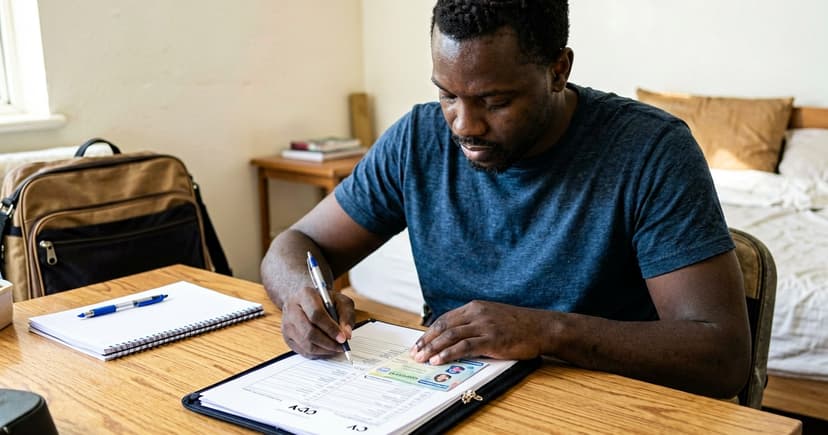
What to bring to an interview in Mozambique fits into a backpack. Bring your original ID (BI) with a copy, two to three printed copies of your CV, copies of your certificates and diploma, your cover letter, a notebook and pen, and water. Include a list of three to five questions to ask at the end.
After the conversation, follow-up is done with a short thank-you email in the following 24 to 48 hours, and a single additional contact if they gave you a deadline.
Most candidates attend the interview and then disappear, without saying thank you or maintaining a professional presence. In the Inademy Guide, we explain every stage of landing a job, and this one combines two that go hand in hand: preparing for the room and staying on their radar after you leave it.
The short answer
- Hard copy documents, never just on your phone. Original ID (BI), CV copies, certificates, and printed cover letter: anyone arriving without paper relies on network connectivity and luck.
- CV copies even if not requested. An interviewer who arrives without your CV in hand is sorted out in two seconds, and the gesture is noticed.
- Questions for you to ask. Three to five, written in your notebook: about the team, the first few weeks, and the next steps in the process.
- Thank-you email within 24 to 48 hours. Five lines, a specific moment from the conversation, reaffirmed interest.
- One follow-up, not ten. Wait for the date they indicated; then, a single polite follow-up. Calling every day gets your name crossed off the list.
- Silence is common. Keep applying for other vacancies while you wait: an active pipeline is your best response.
The complete interview day checklist
Original ID (BI) and a copy. Two to three printed copies of your CV. Copies of certificates and diploma, with originals safely at home. The cover letter you submitted, printed, so you can review your own arguments at the door. Notebook and pen. A small bottle of water. The address and interviewer’s contact details written on paper, in addition to having them on your phone.
Also add a transport plan with a buffer: check the route the day before and leave early enough to arrive 15 minutes ahead of time. In Maputo and Beira, a delayed chapa can eat up your entire buffer; arriving out of breath means losing the first few minutes recovering your breath instead of using them to impress.
Keep everything in a folder so the papers don't get folded. A crumpled CV in your bag conveys the exact opposite of everything you prepared for.
Documents for when you get hired
There are documents that companies only request when they decide to hire you: NUIT (tax number), bank account details, and frequently the admission medical certificate, required by Labor Law 13/2023, in effect since February 21, 2024. You do not need to bring them to the interview.
Preparing them beforehand has two advantages. If the process moves quickly, you hand everything over the next day and build a reputation for being organized. And if they ask you to "bring your documents to the next stage," you already know where everything is instead of hunting down records at ten at night.
Questions you ask at the end
When the interviewer says "do you have any questions?", the answer is never "no". Questions show that you've thought about the position. Good options: what the team is like; what a typical first week looks like; what the next steps in the process are and when they expect to make a decision.
Write three to five in your notebook at home, and narrow the list down to three during the interview so you don't repeat what was already covered. The question about next steps is the most useful: it gives you a timeline, and with a timeline, you know when to follow up.

Questions you should hold off on
Hold off on questions about vacation, benefits, and salary. In Mozambique, it is common for the first conversation to be with HR or the direct manager, and bringing up salary right away shifts the focus to money before you've proven your value. The topic will come up, usually in the second stage or on their initiative.
If they ask about your salary expectations right away, answer honestly and don't make up numbers. First check the figures by sector, such as the 2026 minimum wage table, and provide a realistic range for your level of experience.
The thank-you email, with a template
Send it within the next 24 to 48 hours to the person who interviewed you, keeping it to about five lines. Like this:
Subject: Thank you for today's conversation — [job title]
Good morning, [Name]. Thank you for your time and for the conversation on [day] regarding the [job title] position.
I especially enjoyed when we discussed [specific detail from the conversation].
I am even more interested in the position and the team, and I remain available for the next step.
Best regards, [Name] — [Phone number]
The specific detail is what separates this email from a copy-paste template: it shows you were fully engaged. And if the conversation was via voice call or video, send the email just the same, on that day.
How to ask about the process without sounding pushy
Follow the deadline rule: if they said "we will get back to you by Friday," wait through Friday. On the following Monday, make a single polite contact: a short email or message on the same channel through which they contacted you, reaffirming your interest and asking if there are any updates regarding the next stage.
Never call every day, never send three messages in a row, never show up at reception unannounced. Persistence comes across as desperation, or worse, as disrespect for processes. A well-crafted question asked at the right time has the opposite effect: it confirms how organized you are.
What to do when they don't reply
Silence is the most common response in this market, and it doesn't automatically mean "no." Hiring processes get delayed, budgets freeze, interviewers travel. After your single follow-up, move forward without waiting by the phone: keep applying for new vacancies while you wait.
Keeping your application pipeline active changes your posture even in the next interview: you are no longer dependent on this single response, which calms your tone. If you want to strengthen your foundation, the complete guide on how to create a CV helps you refine your document before every new application.

When the answer is no
You receive a "no" and respond with a brief thank-you message, two lines, asking them to keep your CV for future opportunities. It's a rare gesture, takes a minute, and leaves the door open: failed hires happen within companies, the selected candidate declines, and the backup list lights up.
And react to rejection with data, not resentment. If you made it to the interview, your CV worked; now you refine your verbal performance. Review the most common interview questions and how to answer them and come back stronger next time.
How Inademy helps you
On Inademy, you can create your free profile in minutes, apply for open vacancies through a simple process, and send your CV as a PDF effortlessly. When a new job matching your profile opens, you receive alerts via email and WhatsApp: this is how you keep your pipeline active while waiting for a response from this interview.
Read also
- The errors that get your CV rejected (and what to include instead)
- How to Make a CV on Your Mobile Phone in Mozambique (step by step)
Where these figures come from
- Labor Law 13/2023 (in effect since 21/02/2024, repealing Law 23/2007). Requires the medical admission certificate and forms the basis of the documents requested upon hiring. The NUIT is required for social security and tax purposes.
- Recruitment practice monitored by the Inademy Guide: a 24- to 48-hour window for the thank-you email, a single follow-up after the indicated deadline, and the standard practice of bringing printed copies of the CV.
- AIM, 28/04/2026: 2026 minimum wage rates by sector, cited as a reference for salary ranges when asked about your expectations.
Frequently asked questions
Should I bring a printed CV even if they said it isn't necessary?
Yes, two to three copies. An interviewer who starts the conversation without your CV on hand receives it in two seconds, and the gesture communicates preparation. No one looks bad for having an extra CV in their bag.
Do I need to bring my original ID (BI) or is a copy enough?
Bring both. The copy stays with the company if they need to sign something, and the original confirms your identity without having to go back home to get it. The same applies to certificates: copies in your folder, originals stored safely at home.
Can I ask about salary in the first interview?
Avoid bringing up the subject yourself right away. If they ask for your expectation, answer with a realistic range based on sector figures. Initiating talk about salary in the first conversation shifts the discussion to money before you demonstrate your value.
Doesn't a thank-you email sound desperate?
No, not when it is short and specific: five lines, a concrete detail from the conversation, without pressure. What sounds bad is a long message demanding an urgent response. Calm courtesy is exactly what is expected of a future colleague.
Should I say thank you via WhatsApp?
If all communication with the company was handled via WhatsApp, thanking them there is acceptable using the same short message. Email remains the most formal channel and is preferred when you have the email address of the person who interviewed you.
How many follow-ups can I do?
One, after the deadline they specified, and that is enough. If a response doesn't come, keep applying for other jobs. Calling every day or sending consecutive messages does not speed up any process and burns your reputation with the company.
In summary, what to do today
- Assemble your folder: original ID (BI) with a copy, two to three copies of your CV, copies of certificates, and a printed cover letter.
- Write down three to five questions about the team, the first few weeks, and the next steps in the hiring process.
- Confirm your route and transport, and set a departure time to arrive 15 minutes early.
- Prepare the thank-you email template, about five lines long, to send within 24 to 48 hours.
- Mark on your calendar the deadline indicated by the company, and schedule a single follow-up for the day after the deadline.
Official source: Law No. 13/2023 (Labour Law) is available as a PDF on the website of Mozambique's Supreme Court (Tribunal Supremo): official text (PDF).